If you have ever dreamed about designing your own lake home from the ground up, Grandview Lake can feel like a rare opportunity. It is also a place where the details matter, because buying a lot here is not the same as buying a typical homesite in a standard subdivision. If you want to avoid costly surprises and build with confidence, it helps to understand the rules, approvals, and site factors before you write an offer. Let’s dive in.
Why Grandview Lake lots require extra diligence
Grandview Lake is a private lake community near Columbus, Indiana, described by the Grandview Lot Owners Association as a 400-acre lake with surrounding watershed woods, more than 7 miles of trails, and water levels controlled by spillways. That setting is part of the appeal, but it also means your purchase is shaped by association rules, recorded plats, and county requirements.
Unlike a typical vacant lot purchase, your plans here should start with how you intend to use the property. Whether you want a full custom home, a future boathouse, or a dock setup that supports your time on the water, the governing documents can directly affect what is possible.
Start with the governing documents
Before you focus on finishes, views, or house plans, review the documents that control the lot. At Grandview Lake, the covenants, bylaws, architectural instructions, sewer rules, and watercraft rules are not side notes. They shape what you can build, how you can use the property, and what approvals you will need.
Grandview lots are residential only. The covenants allow one single-family dwelling plus detached accessory structures such as a private garage or boathouse, but those accessory structures cannot be used as residential quarters unless you have prior board approval and county permits.
The covenants also matter if you are thinking like an investor. Lot subdivision that creates a new lot is prohibited, so a strategy built around replatting or lot splitting does not fit the rules.
Confirm the lake rights tied to the lot
Not every lot should be evaluated the same way. If lake access, boat use, or shoreline improvements are a priority for you, confirm exactly what rights come with that specific parcel.
A key point is frontage. Boat registration is limited to owners of lots fronting on Grandview Lake or their renters, so true frontage is more than a marketing feature. It can affect how you use the property and whether it supports the waterfront lifestyle you want.
You should compare the title work, recorded plat, and covenants against the way the lot is being marketed. If a listing suggests lake use, dock potential, or frontage benefits, verify that those rights are supported by the documents rather than assumed from a map photo or listing description.
Evaluate setbacks, width, and build envelope
One of the biggest mistakes buyers make with vacant land is assuming the lot will accommodate the house they have in mind. At Grandview Lake, setbacks and lot dimensions can vary by addition, which means buildability is not a one-size-fits-all question.
Some additions use 40-foot road setbacks and 12-foot or 5-foot property-line setbacks, while others rely on setback lines defined on the recorded plat. Lot width requirements also vary by addition. That is why the plat and addition-specific rules should be part of your review before you commit.
A lot can look large enough on paper but still have a tighter build envelope once setback lines, easements, grading, and shoreline factors are considered. This is especially important if you want a larger custom footprint, detached structure, or a design oriented to the water.
Use a site plan early
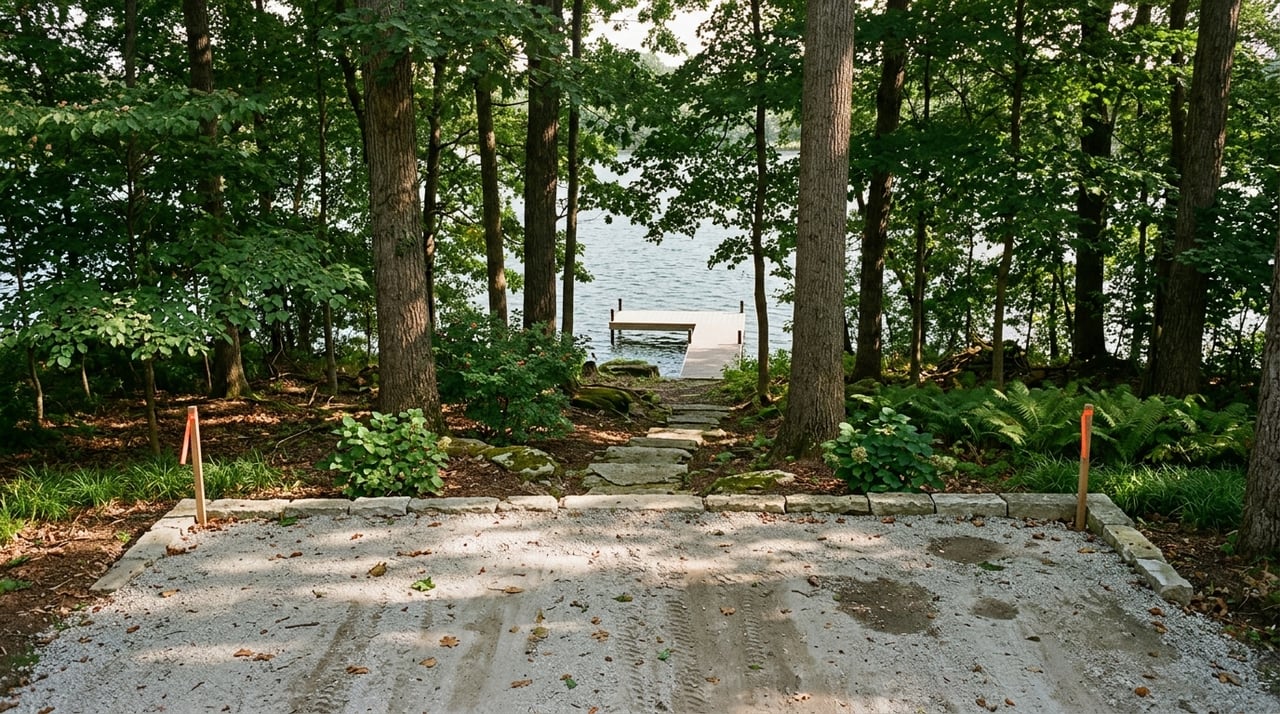
At Grandview Lake, an early site plan can save time, money, and frustration. The association wants lot lines, setbacks, easements, topography, grading, and the waterline or shoreline shown clearly, and for overwater projects it also references county GIS mapping and a shoreline tied to the lake’s 730-foot pool level.
In practical terms, that means you should not rely only on a basic listing sheet or a rough sketch from memory. A detailed site plan helps you understand what the lot can support before you get too far into design work.
The City of Columbus-Bartholomew County planning page also points users to the Bartholomew County GIS layer and notes that the zoning ordinance was last updated June 18, 2024. Verifying parcel data and zoning early is a smart step, especially if you are comparing multiple lots or evaluating a teardown versus raw land.
Know the difference between raw land, teardown, and improved lot
You will often hear Grandview opportunities described as raw land, teardown, or improved lot. Those labels can be helpful, but they do not replace due diligence.
A raw lot may require more site work and infrastructure planning. A teardown may offer an established site but still require approvals if your new construction changes the footprint or grading. An improved lot may include existing features, but you should still verify that those improvements were properly approved and permitted.
At Grandview Lake, changes to footprint, grading, or accessory structures still run through the approval process. So even when a property looks like a shortcut to building, you should treat it as a document-driven decision.
Understand the approval process before you build
If you plan to build custom, association approval is a major part of your timeline. GLOA approval is required before construction of a dwelling or outbuilding, and the covenants require a general plan and bill of materials before work begins.
The architectural instructions are clear that plans should be submitted before excavation. Review can take up to 30 days, no work should begin before written approval, and any change in dimensions after approval must be resubmitted.
The board may inspect the stakeout, and significant deviation from approved work can trigger county stop-order action. That makes accuracy, coordination, and clean communication with your builder especially important from the start.
Coordinate county permits with association review
Association approval is only part of the process. Bartholomew County code enforcement states that a permit is required for most projects over $300, including new homes, garages, decks, additions, roofing, siding, demolition, and similar improvements.
The county also commonly requires plans, site plans, septic releases, driveway permits, and zoning compliance items. At Grandview Lake, sewage must connect to the GLOA sewer system, so you will want to align the county process with the association’s sewer and architectural requirements.
This is where good builder coordination matters. A well-prepared team can help you sequence the lot closing, survey work, site planning, approvals, and permit applications in a way that keeps your project moving.
Plan for sewer and site infrastructure
Sewer is not a detail to sort out later. GLOA’s sewer rules require a sewer layout plan before connection, and the user is responsible for the service line, grinder pump, electric service, shut-off valve, and ongoing maintenance on the user side of the collection point.
That means your budget should account for more than the visible parts of the build. Site infrastructure, grading, erosion control, and utility coordination can all affect the real cost of turning a vacant lot into a finished lake home.
The association also requires silt mitigation measures to protect the lake, and a surveyor-prepared site plan is recommended. On sloped or shoreline lots, that early planning can be especially valuable.
Think carefully about docks, boathouses, and shoreline work
For many buyers, shoreline improvements are a big part of the vision. At Grandview Lake, those improvements have their own rules, and they should be reviewed separately from the house itself.
A dock is defined as a flat structure with no walls or roofs, and docks, boat lifts, and floats generally may not extend more than 40 feet from the original shoreline. The lakefront area is the 40-foot band along the natural shoreline.
Lakefront structures are limited to one contiguous one-story structure, generally no more than 400 square feet in the lakefront area and 15 feet high. They cannot be habitable or include a full kitchen. Overwater structures are also one story, height-limited, sized by berth count, and may not include plumbing or a human-waste system.
If a property already has a dock or boathouse, do not assume today’s rules apply in exactly the same way. Some older approved structures can be grandfathered, so it is important to confirm whether an existing improvement is legacy, modified, or subject to current standards.
Match the lot to your boating plans
A beautiful lot still needs to fit how you plan to use the lake. Grandview’s boat rules matter when you are evaluating whether a property supports your preferred setup.
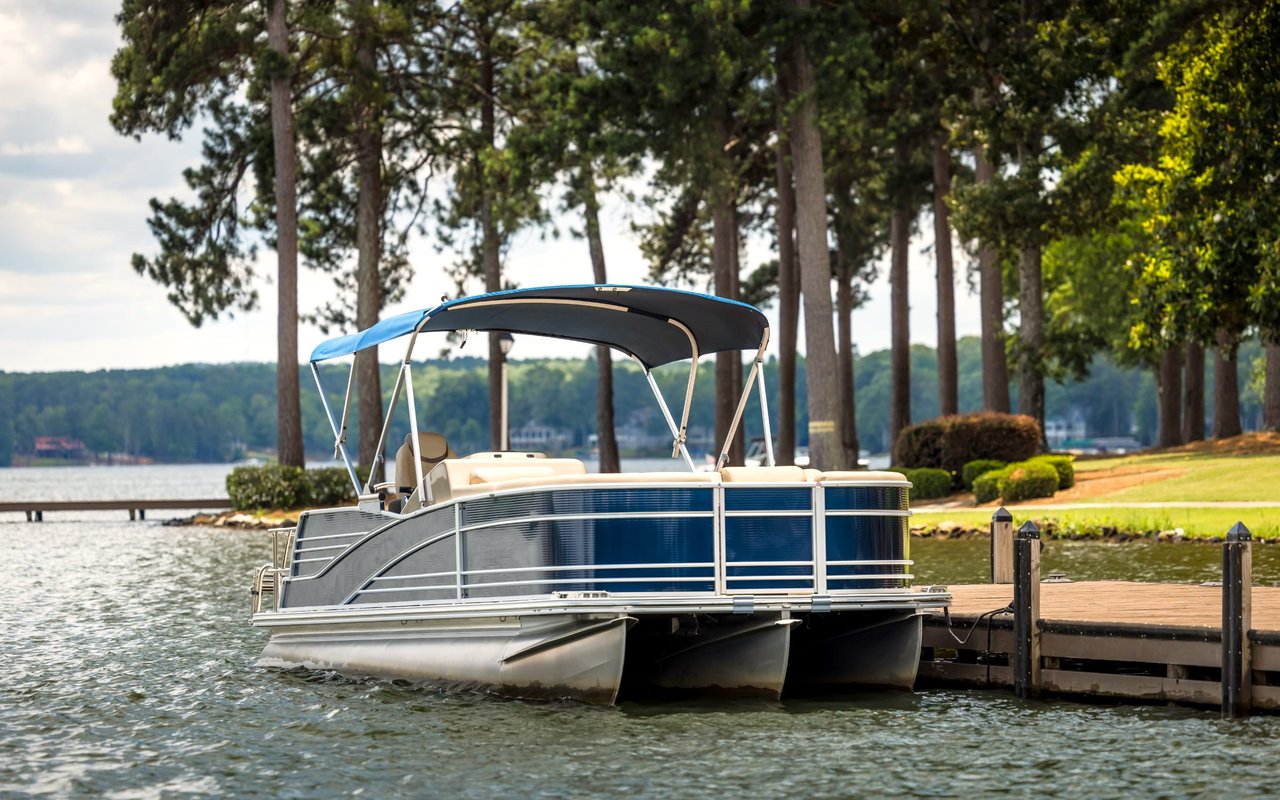
The lake limits motorized boats to four per lot. It also caps power-boat length at 21 feet, pontoons at 25 feet, sailboats at 19 feet, and boat weight at under 4,500 pounds.
For day-to-day use, power boats travel counterclockwise, stay 100 feet from shore unless idling, and heavy-wake use is pushed farther out. If contractor boats have been outside Grandview, they must go through inspection and cleaning procedures before use on the lake.
Consider rental rules before you buy
If part of your plan includes leasing the property, review the rental rules early. Rentals are allowed only under a written lease of at least three months, and subleasing is not allowed.
There is also an important lake-use detail. If a lot is leased, the owner’s lake-use rights are suspended during the lease term. If a tenant will use a boat, the tenant must complete GLOA registration and safety steps, and only one power boat may be registered to a renter at a time.
Those rules can affect how you evaluate the property’s flexibility, especially if you are weighing personal use against rental use in different seasons.
Prepare for construction financing questions
Buying a lot and building custom often means coordinating several moving parts at once. In many cases, that includes the lot purchase, builder contract, and construction financing timeline.
Construction loans are usually short-term, are often funded in advances as work progresses, and may carry higher rates than standard mortgage loans. Some convert to permanent financing, while others require a new loan when construction is complete.
That is why timing matters. If you are buying at Grandview Lake, it helps to line up your lender conversations early so the lot purchase and build plan work together.
A smart buyer checklist for Grandview Lake
Before you close on a lot, ask for and review these items:
- Covenants
- Bylaws
- Lake-use rules
- Watercraft rules
- Architectural approval instructions
- Sewer rules
- Recorded plat
- Survey
- Any prior approvals
- Any documents showing grandfathered rights
If the lot is marketed as improved, also verify that the home, dock, boathouse, sewer connection, and other improvements are reflected in association approvals and county permits. It is far better to confirm those details before closing than to discover missing approvals after you take ownership.
Why local guidance matters here
Buying a lot and building custom on Grandview Lake can be incredibly rewarding, but it is not a plug-and-play process. You are buying into a private lake community with specific covenants, layered approvals, and parcel-level details that can materially affect your plans.
When inventory is limited and each lot has its own story, local insight becomes a real advantage. If you want help evaluating frontage, build potential, approvals, or the right next step for a custom lake home, Christopher Braun offers private, concierge-level guidance tailored to Grandview Lake.
FAQs
What documents should you review before buying a lot on Grandview Lake?
- You should review the covenants, bylaws, lake-use rules, watercraft rules, architectural instructions, sewer rules, recorded plat, survey, and any prior approvals or grandfathered rights tied to the property.
What approvals are required to build a custom home on Grandview Lake?
- You need GLOA approval before construction of a dwelling or outbuilding, and most projects over $300 also require Bartholomew County permits and related plan review items.
What should you verify about lake frontage on a Grandview Lake lot?
- You should confirm that the title work, plat, and covenants support the frontage and lake-use rights being advertised, because frontage can affect boat registration and waterfront use.
What are the dock and boathouse rules at Grandview Lake?
- Docks, lifts, and floats generally may not extend more than 40 feet from the original shoreline, and lakefront or overwater structures are subject to size, height, and use limits under GLOA rules.
Can you rent out a property at Grandview Lake?
- Yes, but rentals must be under a written lease of at least three months, subleasing is not allowed, and the owner’s lake-use rights are suspended during the lease term.
What should you check on an improved lot at Grandview Lake?
- You should verify that any existing home, dock, boathouse, sewer connection, or other improvements were properly approved by the association and permitted through the county where required.