Are you dreaming about a lake home that feels calm the moment you walk in? At Sweetwater and Cordry Lake, relaxed living is less about flashy décor and more about smart design that works with wooded lots, four-season weather, and the rhythm of weekend guests and lake gear. If you want a home that is easy to enjoy, easy to reset, and well suited to life in this private Brown County lake community, these ideas will help you picture what matters most. Let’s dive in.
Design for the Sweetwater/Cordry setting
Sweetwater and Cordry Lake sit within the Cordry-Sweetwater Conservancy District, a private Brown County lake community established in 1961. The district covers about 2,300 acres and roughly 1,700 lots, with land intended for single-family residential use and amenities reserved for lot owners and their guests.
That private-lake setting shapes the design story right away. Homes here often feel more like retreat properties than standard subdivision homes, so the best interiors support both quiet everyday living and easy hosting.
Brown County’s landscape matters too. The area is known for rugged hills, ridges, wooded views, and shaded terrain, which makes steep lots and tree-lined outdoor spaces a natural part of the experience.
That is why the strongest homes here tend to feel easy, not formal. Good design helps you move comfortably from parking area to kitchen, from indoors to porch, and from lake day cleanup to relaxed evening living.
Prioritize easy everyday layouts
At Sweetwater and Cordry Lake, a relaxed floor plan often starts with main-level ease. If a home can support sleeping, cooking, and primary living space on one level, daily life feels simpler, especially on hilly sites.
This matters even more in a four-season climate. Nearby climate data for Bloomington shows average annual precipitation of about 49.38 inches, annual snowfall of 17.5 inches, warm and humid summers, and chilly winters, so your layout should account for wet shoes, coats, towels, and muddy paths through the house.
A practical setup often includes:
- Main-level bedroom access, if possible
- Direct flow from garage or parking area to kitchen
- A bathroom near the main gathering spaces
- Easy access to a porch or outdoor sitting area
- Storage near entry points instead of deep inside the home
When the home feels simple to use, it also feels more restful. You spend less time managing the house and more time enjoying the lake.
Use the lower level well
On many wooded or sloped lots, a lower level or walk-out space can do a lot of heavy lifting. These areas are especially useful for the messier and more flexible parts of lake life.
Basements and lower levels are well suited for recreation space, storage, hobby rooms, offices, extra bedrooms, and utility areas. In a Sweetwater/Cordry home, that can translate into a game room, bunk room, gear storage, second laundry zone, or guest retreat that keeps the main level feeling calm and uncluttered.
Hard-wearing materials make a big difference here. Concrete and other durable finishes hold up better in moisture-prone spaces and are easier to maintain after busy weekends.
Create a true mudroom or lake room
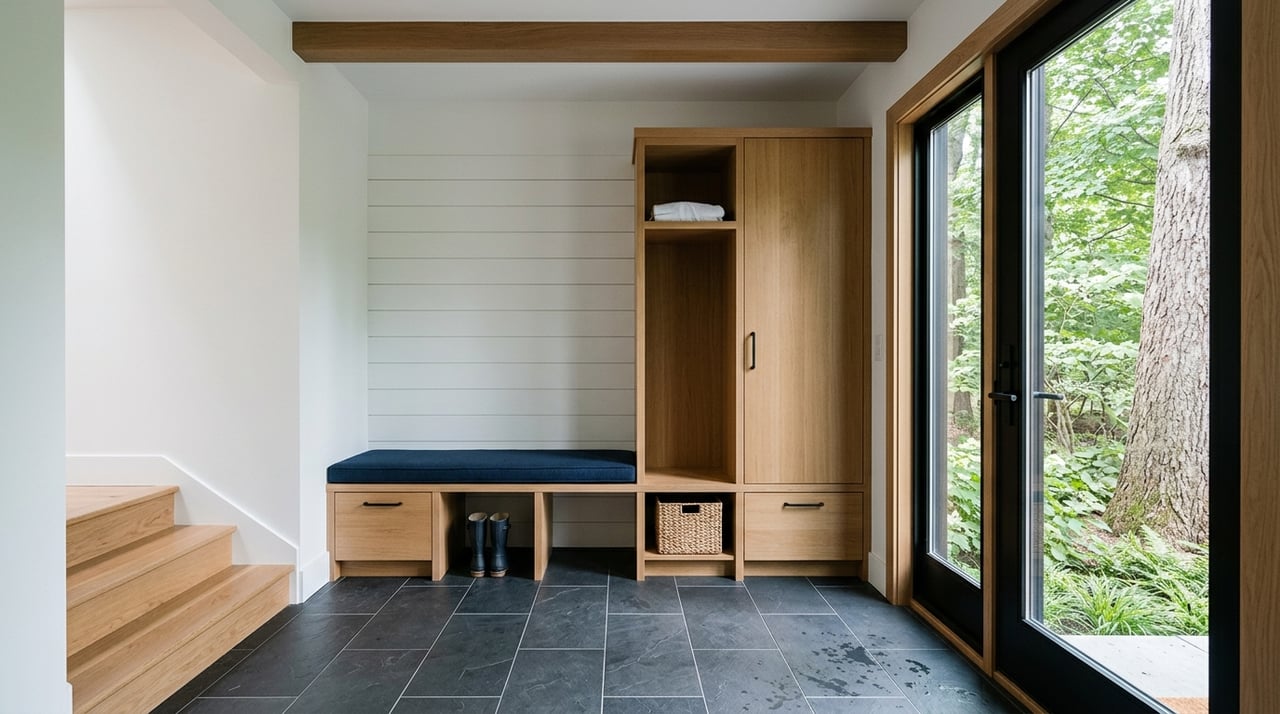
One of the smartest design choices for this community is a dedicated drop zone. A mudroom, rear-entry bench area, or compact lake room gives wet gear and everyday clutter a place to land before it spreads through the house.
For Sweetwater and Cordry, this space can hold much more than coats and shoes. It can help manage life jackets, beach towels, fishing tackle, dog supplies, rain gear, and bags for a full weekend at the lake.
A well-planned mudroom often includes:
- Bench seating for taking off shoes
- Wall hooks for jackets, towels, and bags
- Open cubbies for quick-grab items
- Closed cabinets for visual calm
- Durable flooring that is easy to wipe clean
- A nearby laundry area or sink, if space allows
This kind of feature is not just attractive. It supports the way people actually live in a lake home.
Add a rinse-and-dry zone
There is also a practical reason to think beyond basic storage. The conservancy district’s zebra mussel prevention guidance notes that equipment may need decontamination through hot high-pressure washing, approved treatment methods, or drying periods.
That makes a hose-down area, garage sink, or ventilated drying space genuinely useful. If your home has room for a simple utility zone near the garage, dock path, or lower-level entry, it can make cleanup far easier and help keep gear organized.
Design for guests without overcrowding
Because this is a private, amenity-based lake community, homes often host family and friends. The goal is not to pack in as many beds as possible. The goal is to create flexibility so guests can stay comfortably without taking over the home.
That usually means choosing rooms that can serve more than one purpose. A loft can become overflow sleeping space, a small office can double as a quiet guest room, and a lower-level media room can shift into bunk space when needed.
Focus on flexible rooms
If you are planning updates or comparing homes, look for spaces that can adapt over time. A guest-ready home often feels more relaxed when each room has a clear job but can stretch when the house is full.
Helpful flexible spaces may include:
- Bunk room for visiting family
- Loft with daybeds or trundle beds
- Office with a sleeper sofa
- Lower-level lounge with adjoining bath
- Secondary laundry area near guest spaces
This approach supports seasonal living without making the home feel crowded or overly specialized.
Blur the line between indoors and outdoors
In Sweetwater and Cordry, some of the best living space may not be fully inside. Covered porches and screened porches are especially well suited to this setting because they make the transition from house to landscape feel gentle and natural.
That matters on wooded lots where shade, summer humidity, and changing weather are part of daily life. A porch can become the place where you have coffee, read in the afternoon, or gather after time on the water.
Make porches feel like real rooms
The best porches do more than add square footage. They extend the way the home functions.
If you are thinking about design ideas, consider features like:
- Comfortable seating grouped for conversation
- Dining space near the kitchen
- Durable indoor-outdoor fabrics
- Ceiling fans for summer comfort
- Soft lighting for evening use
- Easy access to towels, drinks, or a grill area
When your porch feels connected to the kitchen and living room, the whole home lives larger. That relaxed transition is one of the strongest design themes for this lake setting.
Choose materials that stay calm and durable
A Sweetwater/Cordry home does not need a heavy-handed lake theme to feel right. In fact, the most timeless interiors here are usually the ones that take cues from the setting itself.
Think warm woods, stone accents, soft blues, greens, natural neutrals, and low-gloss finishes. These choices echo the wooded landscape and water views without feeling forced.
Keep the palette simple
A restrained material palette can help your home feel more restful from the start. It also makes it easier to furnish the property in a way that looks polished but still handles regular use.
Consider leaning into:
- Natural wood tones
- Stone or stone-look surfaces
- Crisp whites in kitchens and baths
- Muted blue or green accents
- Matte or low-sheen finishes
- Built-ins that reduce visible clutter
The goal is not luxury for its own sake. It is comfort, durability, and a space that feels easy to come back to every weekend.
Favor wipeable, hard-wearing finishes
Lower levels, entry zones, and guest-heavy spaces benefit from practical materials. Floors, furniture, and surfaces that wipe down easily will look better over time and reduce maintenance after busy lake days.
This is especially useful in a climate with rain, snow, humidity, and frequent indoor-outdoor traffic. The best-looking homes are often the ones designed to stay clean and dry with less effort.
Respect the lot and weather conditions
Design at Sweetwater and Cordry is not only about style. It is also about working with steep lots, wooded surroundings, and changing weather.
Simple building and finish decisions can help a home stay more comfortable and easier to maintain. Good drainage, wide roof overhangs, gutters, flashing over openings, and avoiding details that trap standing water all support long-term performance.
Let the exterior support easy living
On sloped, wooded sites, exterior design should help you manage rain, snowmelt, and daily foot traffic. That can shape everything from the path to the front door to the placement of storage and outdoor seating.
Useful ideas include:
- Covered entries that protect arrivals in wet weather
- Walkways that feel secure and easy to navigate
- Outdoor storage placed near activity zones
- Rooflines and drainage details that move water away from the home
- Durable surfaces at heavily used doors and steps
When the outside of the home works well, the inside feels easier too.
Match design to the actual lake lifestyle
The district’s rules also offer a helpful clue about how to design for life here. Sweetwater and Cordry are not geared toward oversized wake-sport setups. The conservancy district prohibits houseboats, personal watercraft, wake boats, and wake surfing, while also regulating certain watercraft sizes and horsepower.
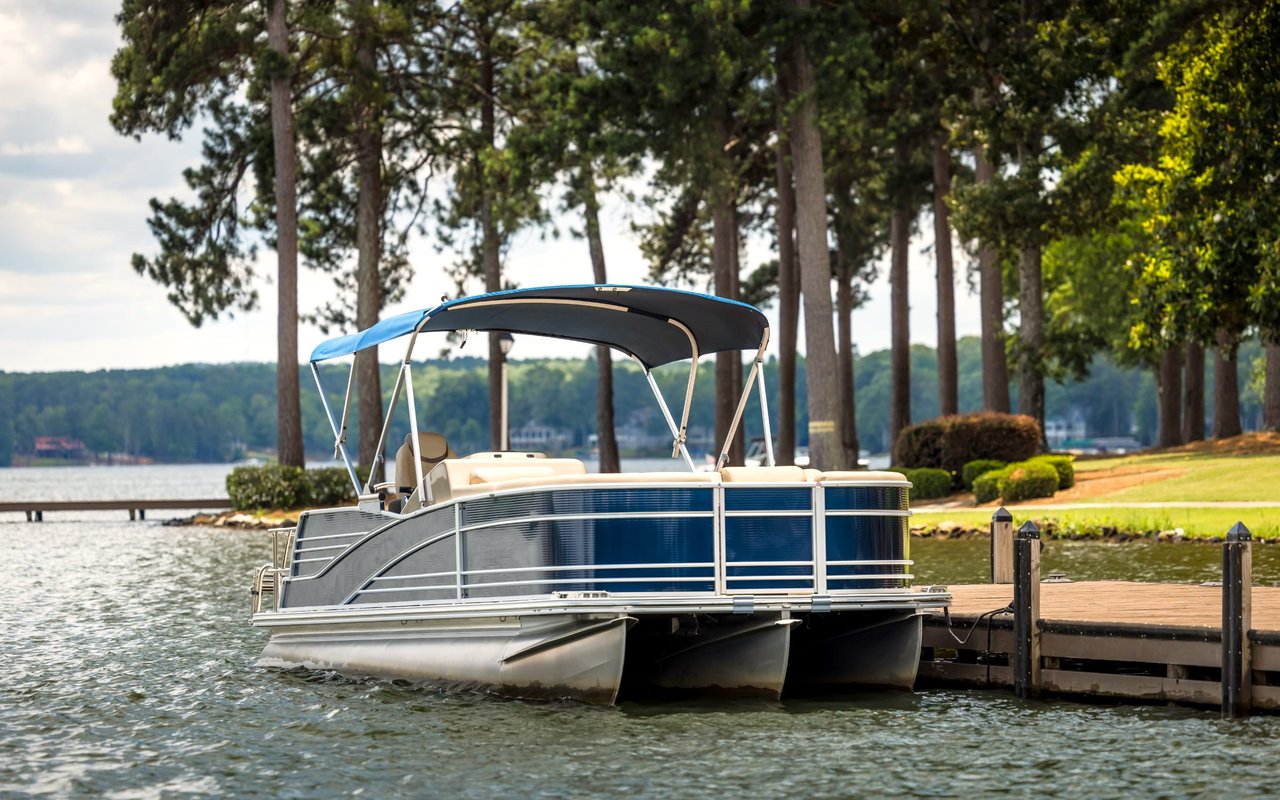
That points toward a quieter recreational rhythm. Homes here are often better served by thoughtful storage for kayaks, canoes, fishing gear, and pontoons than by plans centered on oversized toy storage.
This is also important when thinking about waterfront improvements. District rules define over-water structures such as boat shelters and require approval, so it makes sense to view docks and related features as regulated functional elements, not casual decorative add-ons.
What to look for when touring homes
If you are shopping for a home in Sweetwater or Cordry, design quality often shows up in practical details before it shows up in finishes. A beautiful kitchen matters, but so does the route from the driveway with groceries, towels, and coolers.
As you tour homes, pay attention to how the property handles movement, storage, guests, and cleanup. The most appealing homes usually make lake living feel natural from the first step inside.
A smart checklist includes:
- Is there easy main-level living?
- Where do wet shoes and towels go?
- Is there a lower-level space for guests or gear?
- Do porches feel usable and connected to the house?
- Are finishes durable enough for four-season lake use?
- Does the layout support quiet weekends and full-house gatherings?
These are the details that turn a lake house into a truly comfortable retreat.
If you are considering a purchase or planning how to position a property for sale, local insight matters. For tailored guidance on Sweetwater/Cordry lake homes, design appeal, and what buyers notice most, connect with Christopher Braun.
FAQs
What design style fits homes at Sweetwater/Cordry Lake?
- The best fit is usually refined lake living with natural materials, simple color palettes, durable finishes, and layouts that feel relaxed rather than formal.
What layout works best for a Sweetwater/Cordry lake home?
- A layout with main-level daily living, easy entry-to-kitchen access, and a lower level or walk-out area for guests, storage, and recreation often works very well on hilly wooded lots.
Why is a mudroom important in a Sweetwater/Cordry home?
- A mudroom or lake room helps manage wet towels, life jackets, shoes, rain gear, pet supplies, and other everyday lake items before they spread through the house.
Are screened porches useful at Sweetwater/Cordry Lake?
- Yes, screened and covered porches are especially useful in this wooded four-season setting because they extend living space while supporting comfortable indoor-outdoor flow.
What materials hold up best in a Sweetwater/Cordry lake house?
- Hard-wearing, easy-clean materials such as durable flooring, low-gloss finishes, stone or stone-look surfaces, and practical furnishings tend to perform well in a home with frequent indoor-outdoor traffic.
How do Sweetwater/Cordry lake rules affect home design?
- Community rules support a quieter lake lifestyle and regulate certain watercraft and over-water structures, so storage, cleanup areas, and well-planned functional waterfront features often matter more than oversized recreation setups.