Are you designing a lake home for July weekends, or for all 12 months of the year? At Grandview Lake, the best retreats do more than frame a beautiful water view. They also make everyday living easier through humid summer days, stormy afternoons, crisp fall mornings, and long winter stretches. If you want a home that feels just as inviting in January as it does in June, the right design choices matter from the start. Let’s dive in.
Start With the Grandview Lake Setting
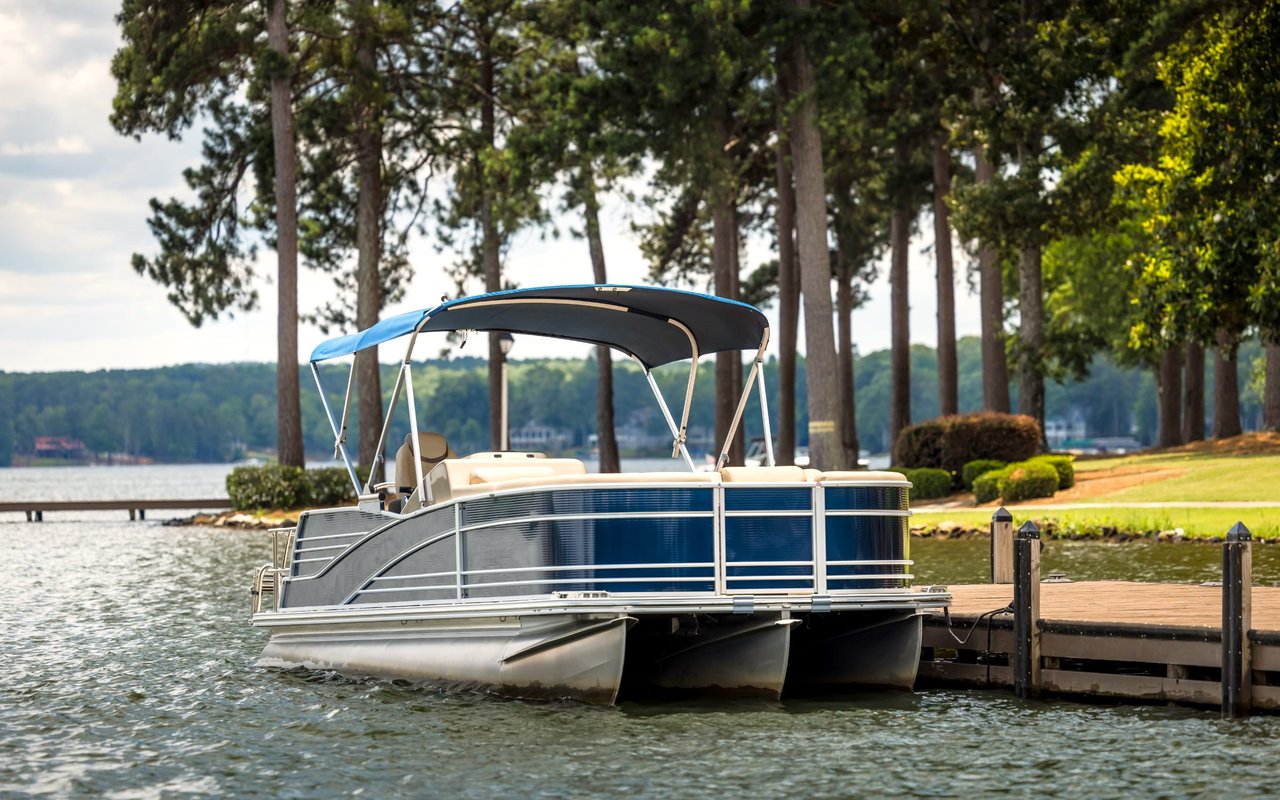
Grandview Lake is a private 400-acre lake near Columbus, Indiana, with clear water, an average depth of 26 feet, a maximum depth of 80 feet, and about 7 miles of hiking trails in the surrounding watershed woods. That setting supports a wide mix of lake activities, including boating, paddling, fishing, sailing, and hiking. In practical terms, your home needs to support both active waterfront days and quieter off-season living.
The location also shapes the design conversation. Columbus is known for its modern architecture and site-responsive design culture, which gives Grandview homes a strong local context. Instead of leaning too rustic or too oversized, many of the most fitting design ideas here feel clean, intentional, and carefully edited.
Design for Four Real Seasons
An all-season retreat at Grandview Lake should respond to real weather, not just the ideal lake day. Columbus has an average annual temperature of 54.0°F, with about 15 days each year above 90°F and about 101 days below 32°F. That means comfort, protection, and flexibility should be built into the plan.
The area also averages 46.7 inches of annual precipitation, 13 inches of snowfall, and about 43 days of thunderstorms each year. Roughly 62% of annual precipitation falls between April and October, which overlaps with peak lake season. So if you are planning outdoor living spaces, it makes sense to think beyond open decks and fair-weather patios.
Features That Make Sense Locally
Based on Grandview Lake’s setting and local climate patterns, several design elements stand out:
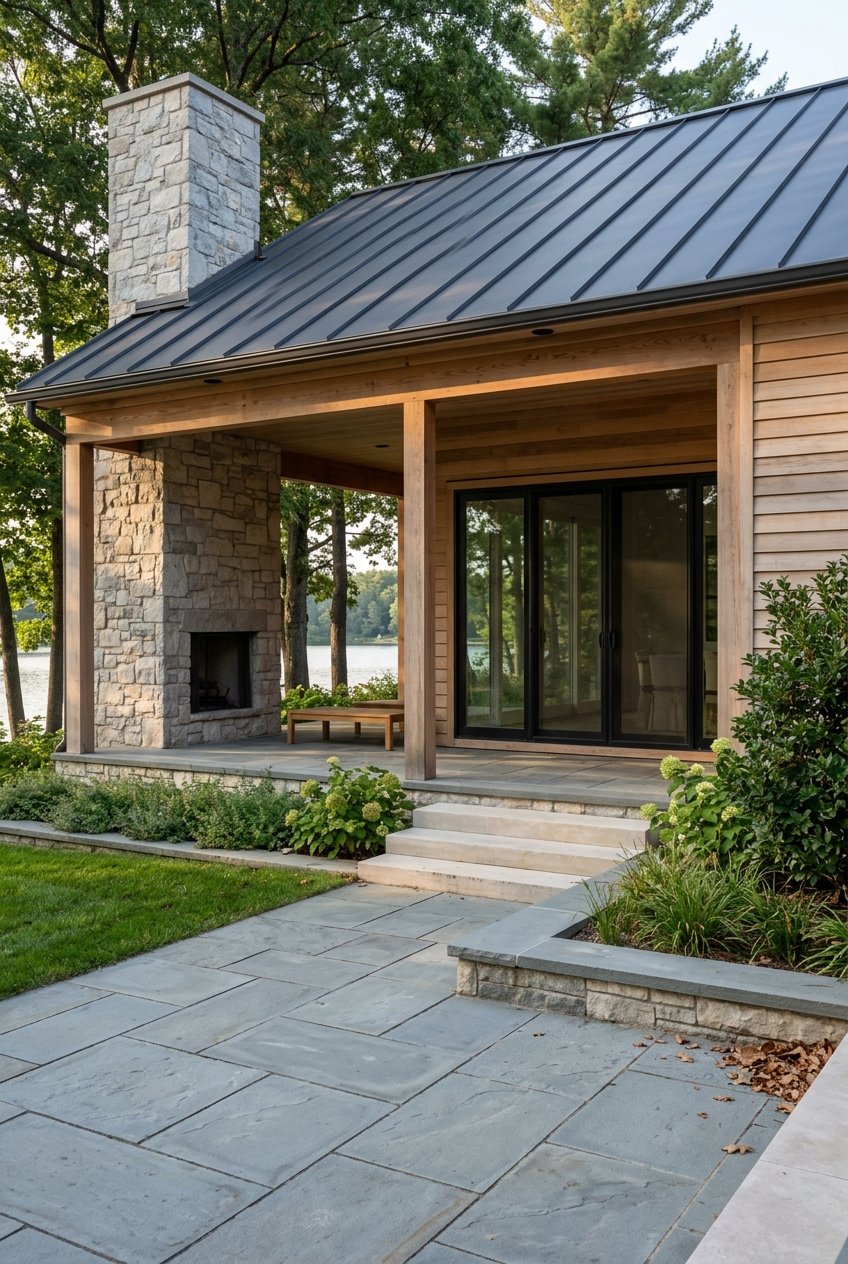
- Covered entries that protect you during rain, snow, and everyday arrivals
- Generous roof overhangs for shade and weather protection
- Strong site drainage to handle periods of heavier rain
- Mudroom-style transition spaces for wet towels, shoes, jackets, and lake gear
- A conditioned room for winter gathering and year-round comfort
- Shaded outdoor seating for warmer months
- Non-slip hardscape near entries and lakeside areas
- Easy-access storage for cushions, paddles, life jackets, and seasonal equipment
These are not just convenience upgrades. At a lake property, they help the home function well in every season.
Keep the Lake View Central
The best Grandview Lake homes usually begin with one simple priority: orient the main living spaces to the water. A lake-facing great room creates a natural focal point and keeps the view part of daily life. Even on colder or quieter days, that connection to the shoreline gives the home its sense of place.
That said, a successful floor plan usually needs more than one large room. A smaller den or media room can make the home feel much more usable during winter or on stormy days. It gives you a cozy secondary space without losing the openness of the main living area.
Add a True Four-Season Room
One of the smartest features for this area is a true four-season room or enclosed porch. Unlike a porch designed only for summer, this kind of space can carry real value through changing weather. It gives you another place to enjoy natural light and lake views while staying comfortable during heat, rain, or cold.
For many owners, this becomes the bridge between indoor and outdoor living. It can serve as morning coffee space, reading room, game area, or overflow gathering space when the weather is less predictable.
Think Low-Profile at the Shoreline
At Grandview Lake, shoreline design is not just about appearance. It is also shaped by community rules and view preservation. The association’s guidance reflects concern about accessory buildings blocking views, and construction cannot extend the shoreline into the lake.
That makes a low-profile, transparent, and topography-sensitive approach especially important. In many cases, the most appealing result is not the largest structure. It is the one that feels visually light, respects neighboring sightlines, and works with the lot rather than overpowering it.
Shoreline Materials and Protection
If you are planning shoreline improvements, approved protection methods matter. Riprap is allowed for shoreline and seawall protection, and sand or small aggregate may be used if it does not affect neighboring lots. From a design standpoint, that supports a shoreline approach that feels durable and natural without adding unnecessary visual clutter.
Plan Outdoor Living With Rules in Mind
Outdoor entertaining is a major part of lake living, but the most effective designs understand where full living functions belong. Grandview Lake’s rules do not allow habitable conversion or full kitchens in lakefront structures, and overwater structures cannot have plumbing or human-waste systems. Limited appliance use is allowed in certain lakefront structures, but these spaces are still meant to play a supporting role.
That means your primary kitchen, full dining functionality, and core living spaces should stay in the main house. A lakeside pavilion or boathouse can still be highly useful, but it works best as a lighter support space for gear, shade, seating, and waterfront access.
Smart Ways to Use a Lakeside Structure
A well-designed lakeside structure can still add a lot of value when used appropriately. Consider features like:
- Comfortable seating and shade
- Storage for water equipment
- Durable surfaces that handle moisture well
- Simple serving or refreshment setup where allowed
- Clear circulation between dock, shoreline, and main house
This approach keeps the property elegant and functional while staying aligned with local standards.
Build for Everyday Use, Not Just Entertaining
A luxury lake home should photograph well, but it also needs to work on an ordinary Tuesday in November. That is often where the strongest all-season design stands apart. Everyday comfort features can be just as important as dramatic entertaining spaces.
Think about how you will arrive home after a rainy walk, where wet gear will go, how guests move through the house after being on the water, and where you will want to spend time on a cold evening. The answers often point to practical, polished features like layered living spaces, durable entry zones, and storage that is easy to access but out of sight.
Understand Approvals Before You Design
At Grandview Lake, a beautiful plan still needs to clear the right approvals. The Grandview Lot Owners Association requires architecture review before construction or renovation of homes, docks, boat houses, lifts, fencing, and many other improvements. Final association approval must be in place before county permitting.
The current procedure also defines a 40-foot lakefront area and limits lakefront structures to one contiguous structure of up to 400 square feet, including roof overhang, and 15 feet in height. Overwater structures also have additional size, height, and sightline limits. These details can directly affect what is realistic on a given lot.
County Permits Matter Too
Bartholomew County also requires permits before beginning construction, alteration, or repair of any building or structure over $300. Projects such as decks, porches, sun rooms, roofing, siding, window replacement, and kitchen or bath remodels can require permits. If your property involves floodplain development, a local permit is required as well.
This is one reason local guidance matters so much at Grandview Lake. A design that looks appealing on paper may need adjustment once association standards, lot conditions, and county requirements are all considered together.
Design Choices That Support Resale
At Grandview Lake, resale value is often tied to restraint as much as luxury. The strongest all-season homes tend to preserve water views, keep accessory structures visually light, and make the property easy to use in every season. They avoid the kind of clutter or overbuilding that can compete with the shoreline itself.
That matters whether you are building for the long term or improving a home with future marketability in mind. In a view-sensitive lake community, compliance, functionality, and architectural discipline are all part of the value story.
Why Local Insight Helps
Designing or updating a Grandview Lake retreat involves more than choosing finishes or square footage. You are balancing climate, views, shoreline rules, architecture review, county permitting, and long-term resale appeal. The homes that perform best usually reflect a strong understanding of how all those pieces fit together.
If you are buying, selling, building, or planning a renovation at the lake, working with someone who knows the community can help you make more confident decisions from the start. For tailored guidance on Grandview Lake homes, lots, and design-driven resale strategy, connect with Christopher Braun.
FAQs
What makes a Grandview Lake home work well year-round?
- The most effective all-season homes combine lake views with practical features like covered entries, weather protection, storage for gear, a mudroom-style transition area, and a conditioned gathering space that stays comfortable beyond summer.
What climate factors should shape a Grandview Lake retreat design?
- Columbus averages about 15 days per year above 90°F, about 101 days below 32°F, 46.7 inches of annual precipitation, 13 inches of snowfall, and around 43 thunderstorm days, so homes here benefit from shade, drainage, enclosed flex spaces, and durable outdoor surfaces.
What are the rules for Grandview Lake shoreline structures?
- Grandview Lake requires architecture review before many exterior projects, and current rules limit lakefront structures to one contiguous structure of up to 400 square feet, including roof overhang, with a maximum height of 15 feet, plus additional standards for overwater structures.
Can a Grandview Lake boathouse or lakefront structure include a full kitchen?
- No. Grandview Lake rules do not allow habitable conversion or full kitchens in those structures, and overwater structures cannot have plumbing or human-waste systems.
Do Grandview Lake renovation projects require county permits?
- Yes, many do. In Bartholomew County, permits are required before construction, alteration, or repair of buildings or structures over $300, and common projects like decks, porches, sun rooms, roofing, siding, window replacement, and kitchen or bath remodels can require permits.
Why does view preservation matter for Grandview Lake resale?
- In this lake community, homes often benefit from designs that preserve water views, keep shoreline improvements visually light, and avoid unnecessary bulk, because functionality, compliance, and visual restraint all support long-term appeal.