Eyeing a lake home in Columbus and seeing the term “jumbo” pop up in your financing conversations? You are not alone. Many Tipton Lakes and Grandview Lake purchases cross the line where standard conforming loans stop and jumbo options begin. In this guide, you will learn what counts as a jumbo loan in Indiana, how lenders underwrite second-home and waterfront purchases, what to expect with appraisals and insurance, and how to choose the right loan structure for your goals. Let’s dive in.
What makes a loan “jumbo” in Indiana
Jumbo simply refers to a mortgage amount above the conforming loan limit that the Federal Housing Finance Agency sets each year. Conforming loans can be sold to Fannie Mae or Freddie Mac, while jumbo loans typically cannot. That difference affects underwriting, pricing, and documentation.
Bartholomew County usually follows the baseline conforming limit. Because limits change annually, the first step is to check the current threshold. You can confirm the latest numbers on the FHFA conforming loan limits page. If your planned mortgage amount is above that figure, you will use a jumbo product or a multi-loan structure.
Why lake homes often need jumbo financing
- Waterfront and luxury homes often list above the local median price, so loan amounts frequently exceed conforming limits.
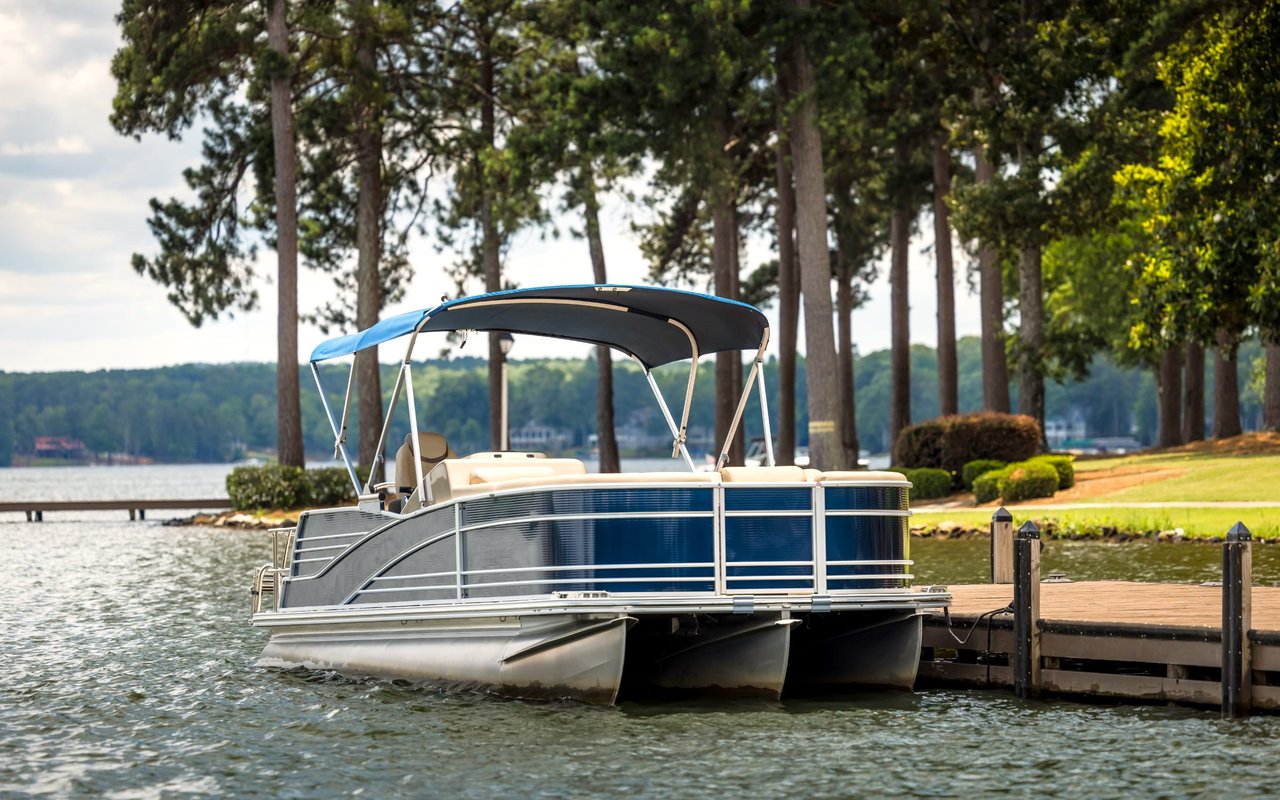
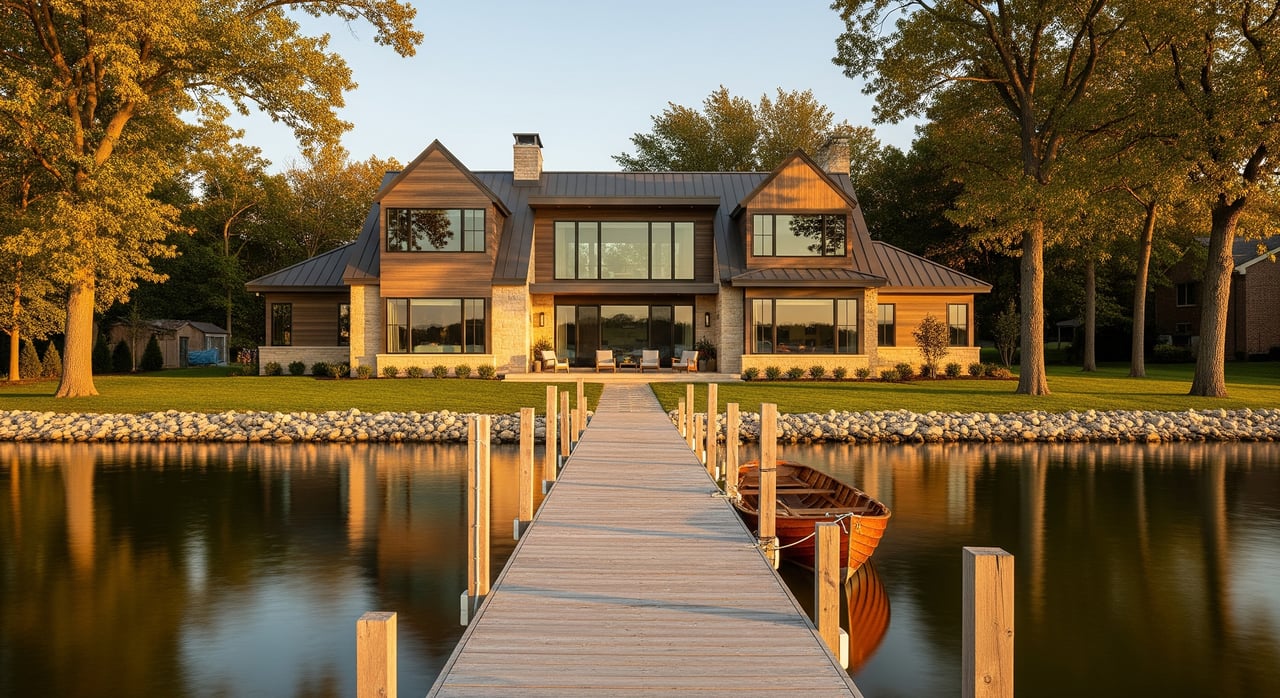
- Unique features like docks, private shoreline, acreage, high-end finishes, and custom basements push values higher and add appraisal complexity that lenders review carefully.
How lenders qualify jumbo loans on lake properties
Jumbo loans follow many conventional standards but with tighter scrutiny. Expect a thorough review of income, assets, credit, occupancy, and the property itself.
Income, assets, and credit
- Income: Most lenders require full documentation. Salaried borrowers provide recent paystubs and W‑2s. Self-employed borrowers usually provide two years of tax returns, and sometimes profit-and-loss statements.
- Credit: Strong credit typically earns better pricing. Many lenders prefer higher scores for jumbo approvals.
- Assets and reserves: For second-home jumbos, lenders often ask for significant liquid reserves measured in months of full housing payment. A common range you may encounter is 6 to 12 months, but exact amounts vary by lender and borrower strength.
Down payment and loan-to-value
Down payment expectations are often higher for jumbo loans. Many lenders cap second-home jumbo financing around 70 to 80 percent loan-to-value for conservative scenarios, while strong borrowers may see more flexibility. Portfolio lenders sometimes stretch on LTV when other factors are compelling.
Debt-to-income and overall stability
Lenders often prefer a debt-to-income ratio under the mid-40s for jumbo approvals. Exceptions may be possible with compensating factors like high reserves, low LTV, excellent credit, or strong cash flow. Underwriters look for financial stability and may closely review seasonal income, side businesses, or large recent asset transfers.
Occupancy matters: second home vs investment
Most lake buyers in Tipton Lakes or Grandview Lake purchase as a second home, which carries stricter standards than a primary residence. If any rental use is planned, the lender may treat the property as an investment, which typically means the tightest rules, lower LTVs, and higher rates. Clarify your occupancy upfront, since lenders will ask about intended use and may verify it.
What is different about appraisals, title, and insurance
Waterfront properties are not cookie-cutter. Lenders and appraisers account for features, shoreline, and community rules that do not show up in standard suburban sales.
Appraisals for lakefront homes
- Few direct comparables: Appraisers must justify waterfront premiums with the best available lakefront comps and thoughtful adjustments for water frontage, lot size, and location.
- Docks and shoreline: Docks, seawalls, bulkheads, boathouses, and shoreline improvements are inspected and can contribute value. Condition and proper permitting matter.
- Help your appraiser: Provide upgrade lists, maintenance records for shoreline structures, surveys or plats that show water frontage, and HOA or community amenity documents. This context helps support the opinion of value when comps are thin.
Insurance and flood considerations
Standard homeowners insurance is required, and lenders verify coverage. Some properties may also need flood insurance. Even if a parcel is not in a mapped high-risk flood zone, lender overlays or localized risk can trigger flood coverage. Check the FEMA Flood Map Service Center early and speak with a knowledgeable local agent about inland lake risk and coverage options.
Title, easements, and HOA rules
Title reviews should verify shoreline access, easements, and any recorded rights affecting docks or water use. Lenders require lender’s title insurance. If the home is in an HOA, rules around docks, boat types, exterior changes, and rentals can influence underwriting and marketability. Obtain and review HOA documents during your contingency window.
Choosing the right loan product
Your best fit depends on loan size, credit profile, property type, and how unique the home is.
Agency-style jumbo
Some banks offer larger, non-conforming products built on institutional templates similar to Fannie or Freddie. These can provide competitive pricing and standardized underwriting, but they may be less flexible with unusual property features and may require higher reserves or more documentation. For baseline rules on occupancy or second-home underwriting, see the Fannie Mae Selling Guide and Freddie Mac Seller/Servicer Guide.
Portfolio loans from local lenders
Portfolio loans are held by the lender rather than sold to investors. They often allow more flexibility with unique waterfront features, nontraditional income, or higher LTVs when other factors are strong. Pricing varies by lender appetite, and terms can be highly specific, so it pays to compare offers and timelines.
Hybrid structures and piggybacks
Some buyers keep the first mortgage under the conforming limit to access conforming pricing, then add a second lien such as a HELOC to cover the rest. This can lower the rate on the first mortgage but adds complexity, an additional payment, and different risk considerations.
Rate and cost tradeoffs
Non-agency jumbos have historically carried slightly higher rates than conforming loans, but spreads change with the market and by lender. Local portfolio lenders sometimes price aggressively to win relationships. Compare APR, points, and fees across multiple quotes, and verify lock periods and conditions in writing. For general consumer guidance on comparing mortgages, the CFPB mortgage guides are helpful.
Your timeline and documents checklist
Waterfront transactions can take longer because of appraisal, insurance, and title details. Start early and assemble documents upfront to keep momentum.
When to contact a lender
- As soon as you know your budget or price range. A quick review will confirm whether your deal is jumbo and outline reserve and down payment expectations.
- Before removing appraisal or financing contingencies. For unique properties, get clarity on appraisal approach and flood insurance availability before you waive protections.
Typical milestones
- Pre-approval: Obtain a written pre-approval that states the program type and major conditions.
- Appraisal and underwriting: Expect a detailed appraisal and a careful underwrite of second-home and jumbo standards.
- Insurance and title: Lock a homeowners quote and, if required, flood insurance. Confirm shoreline rights and any easements.
- Closing: Timelines may extend when specialized inspections or second appraisals are needed.
Documents checklist
- Personal: Government ID and Social Security number.
- Income: 30 days of paystubs and 2 years of W‑2s, plus 2 years of tax returns if self-employed. Provide P&L statements when applicable.
- Assets: 60 to 120 days of bank and investment statements. Be prepared to document any large deposits or transfers.
- Liabilities: Consent for a credit report, and statements for mortgages, auto loans, and other debts.
- Property: Signed purchase agreement, HOA documents, survey or plat, home insurance binder, and any available inspection reports. Include permits or documentation for docks and shoreline work if available.
Local action items for Tipton Lakes and Grandview Lake buyers
- Verify the current conforming loan limit on the FHFA loan limits page to know if your financing is jumbo.
- Speak with two lender types: an agency-style jumbo lender and a local portfolio bank or credit union. Compare rates, reserves, LTV, and timing.
- Order a flood determination and review the FEMA flood maps. Then consult a local agent about inland lake insurance.
- Request HOA documents and confirm rules for docks, boats, shoreline improvements, and rentals.
- Ask your lender how they handle waterfront appraisals and whether comparable sales from nearby lakes are acceptable if local comps are limited.
- Check the Bartholomew County offices for property data: the Assessor for parcel details and the Recorder for recorded easements and covenants.
Bringing it all together
Securing the right jumbo loan for a Tipton Lakes or Grandview Lake home is about two things: understanding the conforming limit for the year and preparing for the extra diligence that comes with second-home and waterfront properties. When you assemble documents early, verify insurance and title specifics, and compare agency-style and portfolio options, you put yourself in position to close smoothly and confidently on a scarce asset.
If you want a local, low‑stress path to a waterfront purchase, let’s talk. For discreet guidance and on‑the‑water insight, connect with Christopher Braun for a private consultation.
FAQs
How do I know if my Columbus lake purchase needs a jumbo loan?
- Compare your planned mortgage amount to the current FHFA conforming limit for Bartholomew County; if it exceeds the limit, you will need a jumbo product or a conforming first plus a second lien.
What down payment is typical for a second-home jumbo in Tipton Lakes?
- Many lenders ask for larger down payments on jumbos, often in the 20 to 30 percent range, with additional liquid reserves required depending on your profile and the property.
Will my rate be much higher with a jumbo compared to conforming?
- Jumbo rates can be higher, but the gap varies by market and lender; portfolio lenders sometimes offer competitive or custom pricing, so it is smart to compare multiple quotes.
What if the waterfront appraisal comes in low due to limited comps?
- You can negotiate price, request a second appraisal, increase your cash down payment to cover the gap, or explore a portfolio lender that may weigh unique features differently.
Do all lakefront homes around Columbus require flood insurance?
- Not always; requirements depend on FEMA mapping and lender overlays, but some properties need flood insurance even outside high-risk zones, so get a flood determination early.