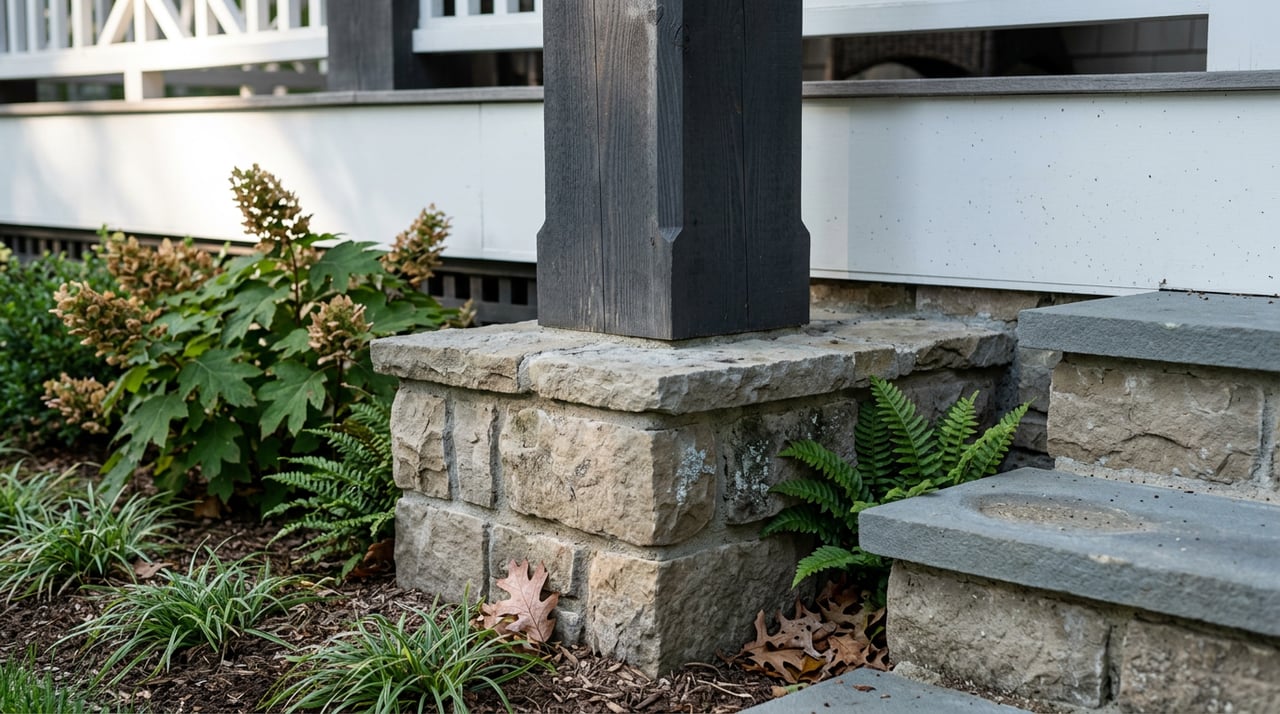
In July, Indianapolis Monthly ran a feature on a couple who spent more than twenty years visiting the husband's parents' place on Grandview Lake before building their own home a few lots over. The topography did not cooperate. The lot dropped thirty feet from the street to the water, so the builder, Stidham Construction, poured five-foot-wide footers instead of the twenty-four inches standard code requires. Everything on that lot, as the project's designer Kestner put it, ended up "a little deeper and a little wider" than a typical build.
That detail is not a footnote about one ambitious lake house. It is a preview of what happens to anyone who buys at Grandview Lake and assumes the rules that apply everywhere else in Bartholomew County are the only rules that apply here. They are not. Grandview Lake is privately owned. The lake, the dam, and 700 acres of surrounding watershed woods belong to the Grandview Lot Owners Association, and GLOA runs its own approval process on top of the county's, with its own paperwork, its own timeline, and its own list of things it will not let an owner do no matter what the county already signed off on.
Two Approvals, Two Clocks
A Bartholomew County building permit gets you the right to break ground. It does not get you the right to build at Grandview Lake. GLOA's Architecture Committee has to separately approve any new home, addition, deck, boat dock, boat house, roofed entertainment area, storage shed, garage, or accessory structure, along with anything that changes a lot's topography or drainage. The association's own procedure spells out a 30-day clock: once a complete application is in, GLOA owes the lot owner a written decision within a month. There's a wrinkle worth knowing if you're the one waiting: under Covenant 4, if GLOA misses that 30-day window on a genuinely complete application, the approval requirement itself lapses. It's a real deadline, not a suggestion, cutting both directions.
Dredging runs on a separate track entirely, governed by its own GLOA procedure and its own permit, distinct from the architecture approval that covers everything above the waterline.
Here is the split in practice:
| Who approves it | County of Bartholomew | GLOA Architecture Committee |
|---|---|---|
| Road paving and county rights-of-way | Yes | No |
| New home or addition | Building permit | Separate written approval, 30-day window |
| Dock, boat house, boat lift | No | Yes |
| Fencing, storage shed, garage | No | Yes |
| Dredging | No | Separate GLOA permit |
The county still shows up for the parts of Grandview Lake that touch public infrastructure. In early June 2026, the Bartholomew County Highway Department closed Pond Drive and part of County Road 650W in the Grandview Lake area for an asphalt overlay. That's the county's jurisdiction, full stop. The moment a project moves from the road to the shoreline, the county steps back and GLOA steps in.
The Boat That Doesn't Come With the House
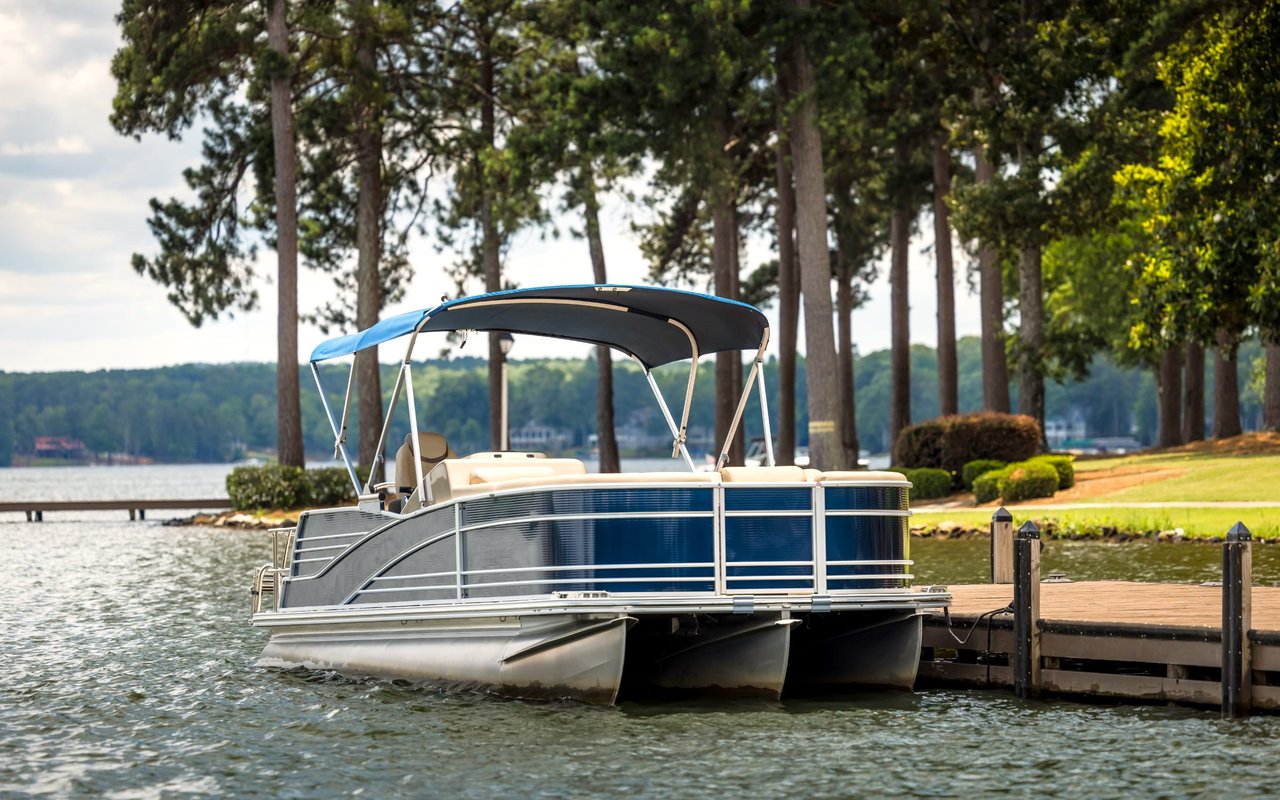
Sellers sometimes list a boat as part of the package, and buyers assume that if it's tied to the dock, it transfers like a fixture. At Grandview Lake, that assumption has a specific limit. GLOA's Boat Operation procedure bars wake-enhancement gear, meaning factory ballast systems have to run empty, trim tabs can't be set to build wake, and no water bags or "fat sacks" are allowed. Boats already carrying that equipment got a cutoff date: they could not be registered and stickered with those devices after January 1, 2009, and existing boats with the devices could not be re-registered to a new lot owner after that same date.
In plain terms, if the boat that came with the house has wake-enhancement equipment installed, it does not automatically get GLOA's decal under your name. That's a conversation worth having with a seller before it becomes a surprise after closing.
Renting Has a Ceiling You Won't Find in an MLS Sheet
Investors looking at Grandview Lake as a short-term rental play need to see the rental covenant before they run their numbers. Following a vote at the 2015 Annual Meeting, GLOA adopted a rental procedure and recorded a covenant amendment restricting leasing, on file with the Bartholomew County Recorder's Office. A lot owner found in violation by a court of competent jurisdiction can be permanently banned from leasing or renting the property at all, not just penalized for a season.
The lease itself has to name every adult occupant, and no more than two unrelated adults are permitted under a single lease. Tenants have to complete GLOA's boat safety instruction and watch the lake safety video before they're issued a renter's boat sticker. None of that shows up in a comp sheet, and none of it is negotiable at the closing table. It's worth reading before you write an offer with a rental pro forma attached.
The Lake Has Sent a Bill Before
GLOA owns the dam outright, an earthen structure completed in 1965 and monitored today with inclinometers and piezometers the association installed to track its performance over time. Dam maintenance has produced real bills for lot owners in the past. Between 2011 and 2012, GLOA assessed every lot owner $4,500 to help fund a new Class I activated sludge wastewater treatment plant, a project that ran over $1.4 million.
That single data point is fifteen years old and shouldn't be treated as a forecast. What it does establish is that capital costs at a privately owned lake get spread across every lot owner when the association decides they're necessary, and a buyer doing due diligence should ask GLOA directly about reserve funds and any planned capital work before assuming the dues line on a closing statement is the only bill that's coming.
Why the Stakes Are Higher When the Shelf Is This Bare
None of this would matter much if Grandview Lake turned over inventory the way a typical subdivision does. It doesn't. Waterfront lots and homes here rarely sit on the market long enough to build a deep comp set, and there are usually only a handful listed at any given moment across roughly 311 total lots, split close to 40 percent permanent residents and 60 percent seasonal. GLOA held its 2026 Annual Meeting on May 16, a reminder that this is an active, governed community, not a dormant HOA that rubber-stamps whatever a lot owner wants.
When inventory is that thin, walking away from a contract because you discovered a GLOA restriction mid-process is expensive in a different way than it would be in a market with fifty comparable listings. The fix isn't complicated. It's asking GLOA-specific questions before you're under contract, not after.
Frequently Asked Questions
Does a Bartholomew County building permit satisfy GLOA's requirements? No. County approval and GLOA's Architecture Committee approval are separate processes with separate paperwork, and GLOA's process applies specifically to anything on the lot itself, including structures that never touch county code.
Can I add a boat lift to an existing dock without new approval? Boat lifts fall under the same architecture approval process GLOA uses for docks and boat houses. Plans go to the GLOA office for the Architecture Committee's review before work begins.
If I buy a home with a boat included, does the boat automatically get registered to me? Only if it doesn't carry wake-enhancement equipment. Boats with that equipment installed have not been eligible for re-registration to a new lot owner since January 1, 2009.
Buying at Grandview Lake means buying into a private governance structure as much as a piece of shoreline, and the difference between a smooth closing and a stalled one usually comes down to who asked GLOA the right questions first. Grandview Lake Property works this shoreline daily, not occasionally, and knows which approvals to line up before an offer goes in, not after. Reach out to schedule a private tour or consultation before your next Grandview Lake purchase or sale.